In today’s world, the first place patients go for medical advice is not a clinic, it’s Google.
They search for symptoms, treatments, best doctors near them, hospital reviews, and even compare healthcare services online.
This shift has made digital marketing a must-have for doctors, clinics, and hospitals that want to stay relevant, reachable, and trusted.
In this article, you’ll learn exactly how healthcare professionals can use digital marketing to build a strong online presence, attract more patients, and improve patient trust.
Why Digital Marketing Matters for Healthcare Today
Healthcare is no longer a purely offline industry. Patients now expect doctors and hospitals to be:
-
visible online
-
easy to contact
-
transparent about services
-
backed by reviews
-
accessible through social media and websites
With telemedicine growing rapidly and competition increasing, doctors who ignore digital marketing risk losing patients to more visible competitors.
Digital marketing isn’t just promotional, it’s about helping patients find the right care faster.

Key Benefits of Digital Marketing for Doctors & Hospitals
1. More Patient Appointments
When someone needs a doctor today, they rarely walk into a clinic without researching first they Google it. Searches like “best cardiologist near me,” “pediatrician in Delhi,” “diabetes doctor Hyderabad,” or “skin allergy treatment” happen every second.
With proper SEO, Google Business Profile optimization, and targeted ads, doctors can appear at the exact moment patients are actively looking for care.
This means:
-
Higher visibility
-
More appointment bookings
-
More footfall to clinics
-
Increased telemedicine consultations
Digital marketing places the doctor in front of high-intent patients, turning online searches into real appointments.
2. Strong Online Reputation
Patients trust doctors who have a strong digital presence.
A doctor with:
-
positive Google reviews
-
authentic patient testimonials
-
educational videos
-
helpful health articles
Will always be considered more reliable than someone with no online information.
Reviews and content act as digital trust builders. When patients see consistent 4.5–5 star ratings, they feel confident that they are making the right choice.
A strong reputation doesn’t just attract new patients, it reinforces credibility among existing ones.
3. Better Patient Communication
Digital platforms allow doctors to stay connected with patients beyond the clinic visit.
By using websites, blogs, social media, and WhatsApp, doctors can:
-
address common patient questions
-
share preventive care tips
-
update patients about seasonal health issues
-
provide instructions before or after procedures
-
announce new services or check-up packages
This continuous communication builds trust and improves the overall patient experience.
Patients feel cared for when doctors are accessible, informative, and proactive online.
4. Competitive Edge
Many local clinics and individual practitioners still depend only on word-of-mouth or offline methods like banners and print ads. This creates a huge opportunity.
Doctors who adopt digital marketing can quickly:
-
outrank competitors on Google
-
build a stronger brand
-
appear more modern and trustworthy
-
attract younger, tech-savvy patients
In a competitive healthcare environment, being digitally active means staying ahead. The earlier a doctor starts, the bigger the advantage they gain over others who join later.
5. Cost-Effective Branding
Traditional marketing methods like hoardings, print ads, and newspapers are extremely expensive and often reach the wrong audience.
Digital marketing:
-
is highly targeted
-
reaches the right audience based on age, location, and interests
-
allows small budgets
-
provides real-time tracking
-
delivers higher ROI
For example, with a small budget, a doctor can run:
-
Google search ads for specific treatments
-
Facebook ads promoting health packages
-
YouTube videos educating patients
This leads to better visibility at a fraction of the cost. Digital marketing is not just cheaper, it is smarter, measurable, and more effective.
Digital Marketing Strategies Doctors & Hospitals Must Use
1. Build a Professional Healthcare Website
A doctor’s website acts like an online clinic. A professional website helps in providing complete details to the users and help them make a decision.
Patients should be able to:
-
Read about your expertise
-
Understand available treatments
-
Check timings
-
Book appointments easily
-
View patient testimonials
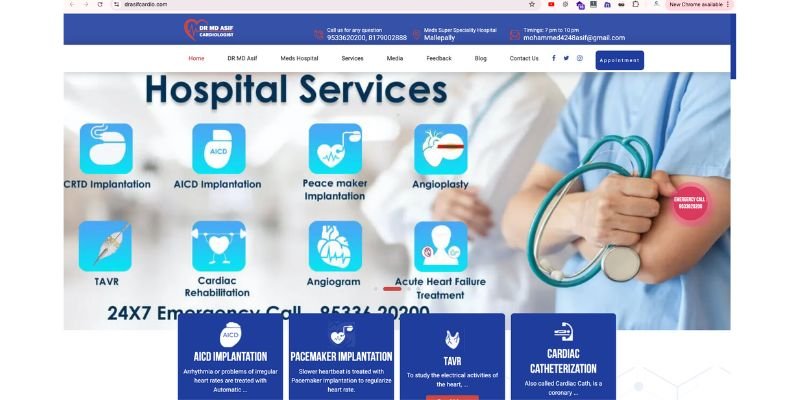
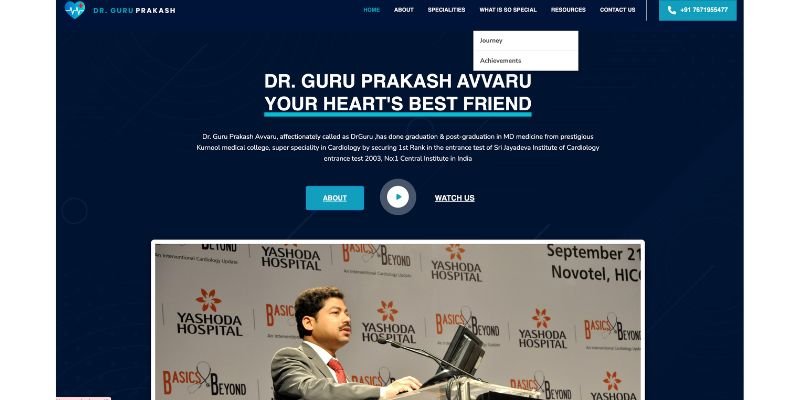
A clean, mobile-friendly website with an online booking system can instantly increase patient flow. Check the below websites of few doctors.
2. SEO for Doctors (Be Visible When Patients Search)
SEO (Search Engine Optimization) is one of the most effective strategies for doctors and clinics to attract new patients online. The goal is simple: when someone searches for a healthcare service, your practice should be the first one they see.
The Power of High Visibility
Think about what potential patients search for:
-
“dermatologist near me”
-
“best dentist in Hyderabad”
-
“knee pain treatment”
Appearing at the top of Google for these types of searches is not luck—it’s the result of a well-planned SEO strategy.
3 Key Steps to a Successful Doctor SEO Strategy
1. Website & Keyword Optimization
The first crucial step is making your website easily understandable for both patients and search engines.
-
Choose the Right Keywords: Optimize your pages with terms that include:
-
The specific treatments you offer (e.g., root canal, laser surgery).
-
Your specialization (e.g., cardiologist, orthopedic surgeon).
-
Your location (e.g., clinic address, city/neighborhood).
-
-
Add Detailed Pages: Create specific, helpful pages like:
-
Comprehensive service pages explaining treatments.
-
Detailed doctor profiles highlighting expertise and experience.
-
FAQ sections to answer common patient questions.
-
2. Master Local SEO
Most patients prefer a doctor close to their home or office. Local SEO makes sure you are visible in your immediate area.
-
Optimize Your Google Business Profile: This is essential for Google Maps and “near me” searches. Ensure your information is accurate and complete.
-
Manage Online Reviews: Promptly respond to all patient reviews (both positive and negative) to build trust.
-
Post Updates: Share recent news, holiday hours, or new services through your profile.
3. Publish Quality Content
Content helps establish you as an expert and builds confidence in your practice.
-
Start a Health Blog: Publish helpful articles and guides about:
-
Common health concerns.
-
In-depth treatment explanations.
-
Preventive tips and wellness advice.
-
When patients read content that educates and helps them, they are more likely to feel confident and choose your practice.
The Result
With a proper SEO approach, your clinic can consistently get in front of patients who are actively looking for your help. This leads to:
-
Increased appointments.
-
Stronger, long-term online presence.
-
Consistent growth for your practice.
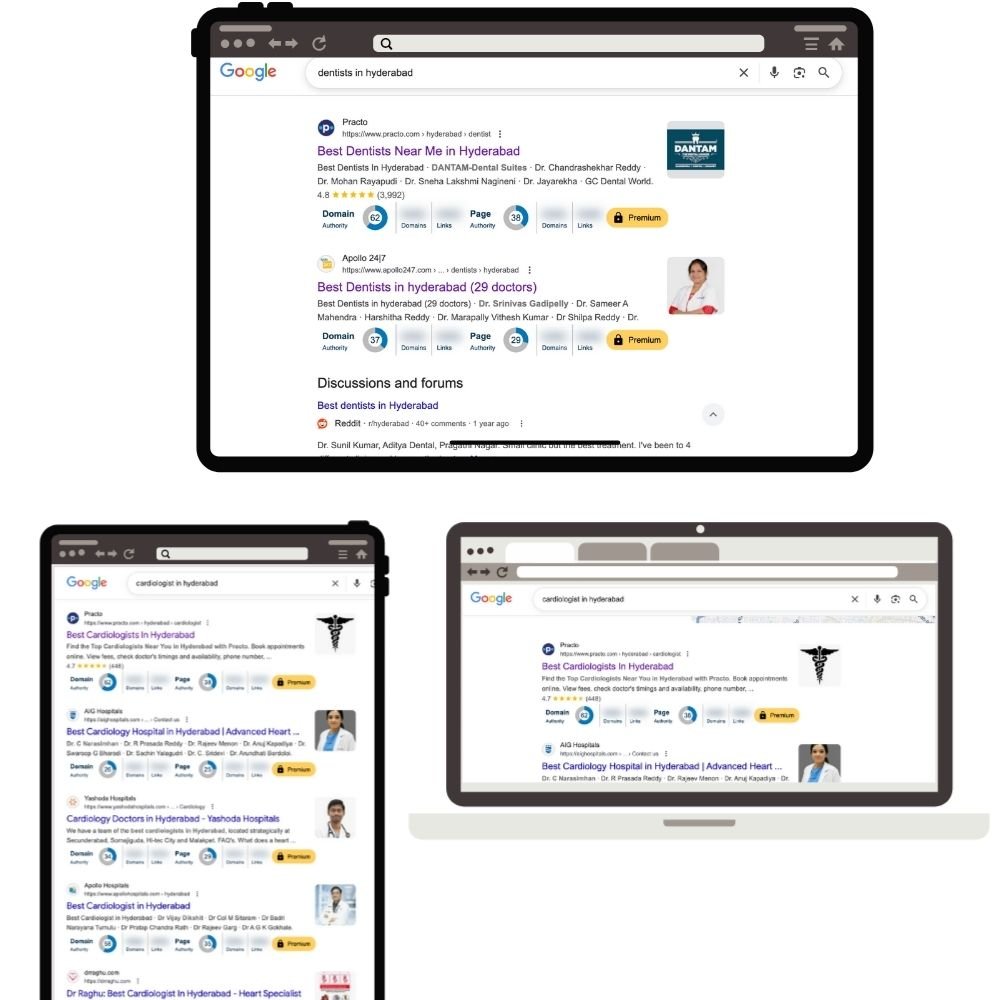
Examples
3. Content Marketing: Educate to Build Trust
Content marketing is a powerful tool for doctors and healthcare providers to establish themselves as trusted authorities and connect with potential patients before they even step into the clinic.
Why Content Matters
When patients look for health information, they are often confused or anxious. By providing reliable, high-quality content, you can:
-
Build Trust: Demonstrate your expertise and care, making patients comfortable choosing you.
-
Establish Authority: Position your practice as the go-to source for reliable health information in your specialty.
-
Attract High-Intent Patients: Answer specific questions patients are searching for, guiding them directly to your services.
Essential Components of a Doctor’s Content Strategy
1. Educational Blog Posts and Articles
Use your blog to address common health concerns and explain complex procedures in simple terms.
-
Answer Patient Questions: Write articles based on the frequent questions you hear in your examination room (e.g., “5 Ways to Manage Chronic Back Pain,” “Understanding the Risks of LASIK Surgery”).
-
Focus on Prevention: Provide actionable tips on wellness, diet, and disease prevention to help your audience stay healthy.
-
Treatment Explanations: Clearly outline what a procedure entails, who is a candidate, and what the recovery process looks like.
2. Video Content (YouTube and Social Media)
Video is highly engaging and allows patients to get a sense of your personality and approach.
-
“Meet the Doctor” Series: Short videos introducing yourself, your staff, and your practice philosophy.
-
Procedural Demonstrations: Use animations or models to visually explain treatments (e.g., a minute-long video explaining knee replacement).
-
Patient Success Stories: Share anonymized testimonials or interviews (with consent) discussing positive outcomes.
3. Engaging Social Media Posts
Use platforms like Instagram and Facebook to share digestible, timely health information.
-
Infographics: Create visually appealing summaries of health statistics or quick tips.
-
“Myth vs. Fact” Quizzes: Debunk common health misconceptions related to your specialty.
-
Live Q&A Sessions: Host scheduled live streams where you answer user-submitted questions in real-time.
The Impact on Your Practice
A consistent and valuable content marketing strategy allows your practice to:
-
Increase Website Traffic: Content attracts people searching for health solutions, driving them to your site.
-
Nurture Leads: Content helps potential patients move from simply reading an article to requesting an appointment.
-
Improve Patient Loyalty: Providing ongoing value keeps current patients engaged and encourages referrals.
4. Social Media Marketing for Doctors
Social Media Marketing for Doctors: Connecting, Educating, and Growing
Social Media Marketing (SMM) allows doctors and medical practices to meet patients where they already spend their time, humanizing the brand and establishing crucial trust and authority.
The Benefits of an Active Social Presence
Using platforms like Facebook, Instagram, LinkedIn, and YouTube strategically can lead to powerful results:
-
Builds Authority and Trust: Sharing reliable medical information positions you as a credible expert in your specialty.
-
Expands Outreach: You can reach prospective patients far beyond your immediate geographic area.
-
Humanizes Your Practice: Sharing behind-the-scenes glimpses of your staff and office builds a welcoming, relatable image.
-
Enhances Patient Engagement: Social channels provide an accessible way to connect with both current and prospective patients.
4 Pillars of a Successful SMM Strategy
1. Content for Patient Education
Your primary goal should be to provide value, not just promotion. Focus on content that is informative and easy to digest.
-
Myth vs. Fact: Use short videos (like on TikTok or Reels) to debunk common health misconceptions.
-
Preventive Tips: Share seasonal wellness advice, nutrition tips, or lifestyle changes related to your field.
-
Q&A Sessions: Host live Q&A videos where you address common patient questions in real time.
-
Procedural Explanations: Use infographics or short videos to simplify complex medical treatments.
2. Platform Selection and Tailoring
Not all content fits every platform. Choose the channels where your target audience is most active.
-
Facebook: Excellent for longer-form posts, sharing practice announcements, promoting events, and building community groups.
-
Instagram: Ideal for visual content, showcasing the human side of your practice, sharing patient testimonials (with permission), and utilizing Reels for quick tips.
-
LinkedIn: Best for professional networking, connecting with peers, and sharing achievements, research findings, and professional insights.
-
YouTube: The platform for in-depth, long-form educational videos and patient guides.
3. Ethical and HIPAA Compliance
Healthcare is a regulated industry, and patient privacy is non-negotiable.
-
No Protected Health Information (PHI): Never share any patient names, photos, medical details, or even subtle identifiable information in your posts.
-
Obtain Written Consent: Always secure a written, HIPAA-compliant authorization form before sharing any patient testimonials or before-and-after photos.
-
Separate Accounts: Maintain distinct personal and professional social media accounts to prevent accidental PHI disclosure.
-
Avoid Medical Advice: Explicitly state that social media posts are for educational purposes only and are not a substitute for a medical consultation.
4. Engagement and Reputation Management
Social media is a two-way street. Active engagement fosters community and trust.
-
Respond Professionally: Address comments and messages promptly and professionally. For any health-specific inquiries, direct the user to call the office for a private consultation.
-
Address Reviews: Thank patients for positive reviews. If addressing a negative review, invite the patient to contact the office privately to resolve the issue, but never disclose details of their case publicly.
-
Use Targeted Ads: Invest a budget in social media ads to target specific local demographics (e.g., age, location, interests) actively looking for a doctor.
5. Online Reviews & Reputation Management
Reviews are the modern version of word-of-mouth. Online reviews are the new word-of-mouth for doctors. Prospective patients heavily rely on sites like Google and Healthgrades to choose a provider. A strong Online Reputation Management (ORM) strategy ensures you not only deliver excellent care but also present a trustworthy image online, which is vital for attracting new patients and maintaining credibility.
ORM starts with monitoring and accuracy. You must claim and regularly check all your profiles on Google Business Profile, Healthgrades, and other directories. Ensuring your Name, Address, and Phone number (NAP) are exactly consistent across all platforms is essential, as incorrect information is a primary driver of negative feedback. Implementing monitoring tools that alert you to new mentions allows for a swift response, whether the feedback is positive or negative.
To protect your image, you need a steady stream of positive reviews. The best approach is proactive: politely ask happy, satisfied patients for a review after a positive visit. Many practices use automated systems (via email or text) to send review requests, often directing positive feedback to public sites and routing any negative feedback to a private internal survey first. This helps you address issues privately before they become public complaints.
Managing negative reviews requires strict HIPAA compliance. The golden rule is simple: never confirm or deny that a reviewer is a patient, and never discuss any details of their treatment or diagnosis publicly. Your response should be professional, empathetic, and brief. Always apologize that their experience did not meet expectations and immediately invite the reviewer to contact the office privately (via phone or secure email) to resolve the issue offline. This shows you are listening while protecting patient privacy.
Ultimately, ORM is more than just damage control; it’s a tool for improvement. By analyzing recurring complaints (e.g., long wait times, billing confusion), you can identify operational weaknesses and implement concrete changes in your practice. Consistent monitoring, ethical engagement, and internal improvements ensure your online reputation remains a strong asset for long-term growth.
When a patient sees:
-
4.8-star rating, 200+ positive reviews, and real testimonials. They trust you more.
Encourage happy patients to leave reviews on Google. Always reply professionally to negative feedback, this shows care and responsibility.
6. Paid Ads (Google & Facebook)
Paid advertising on Google and Meta (Facebook/Instagram) offers doctors two distinct and powerful ways to attract new patients, but both require strict adherence to advertising regulations and patient privacy rules.
Google Ads: Capturing High Intent (The Active Searcher)
Google Ads, operating on a Pay-Per-Click (PPC) model, is ideal for immediately reaching patients who are actively searching for a specific service. This is where high patient intent meets instant visibility.
-
The Strategy: You bid on high-intent keywords like “dentist near me,” “best orthopedic surgeon [City],” or “urgent care open now.” Your ad appears at the top of the search results precisely when the patient is ready to book.
-
Key Tactics:
-
High-Intent Keywords: Focus on specific services, symptoms, and location modifiers to ensure highly relevant clicks.
-
Geo-Targeting: Restrict your ads to a precise geographical radius around your clinic to avoid wasting budget on distant users.
-
Call Extensions: Use click-to-call extensions on mobile ads, which are essential for urgent or immediate appointment bookings.
-
Conversion-Optimized Landing Pages: Send ad traffic to dedicated pages with clear calls-to-action (CTAs) and easy-to-use booking forms, not just your homepage.
-
Meta Ads: Building Awareness and Interest
Meta Ads (Facebook and Instagram) are not search-based; they are interest-based. They are excellent for building brand awareness, educating potential patients about elective treatments, and showcasing the human side of your practice.
-
The Strategy: You target users based on general demographics, interests, and behaviors (e.g., “new parents,” “fitness enthusiasts,” or “people interested in dermatology”). This is effective for services that require education or a relationship before conversion, like cosmetic procedures or specialty care.
-
Key Tactics:
-
Visual Storytelling: Use high-quality imagery and video (especially vertical video like Reels) to showcase your facility, staff, and practice philosophy.
-
Educational Content: Promote educational blog posts, webinars, or quizzes rather than direct sales, using the content to move users down the marketing funnel.
-
Lookalike Audiences: Leverage your existing patient list or website traffic to create “Lookalike Audiences” of new users who share similar characteristics to your current patients.
-
Critical Compliance and Privacy Rules
Healthcare advertising is subject to strict rules on both platforms, as well as patient privacy laws like HIPAA. Non-compliance can result in rejected ads, account suspension, and severe fines.
-
Avoid Sensitive Targeting: Meta platforms strictly prohibit targeting users based on specific health conditions, diseases, or mental health status. Targeting must be broad and general (e.g., “interested in wellness” vs. “diagnosed with diabetes”).
-
No Misleading Claims: Never use exaggerated language, make guaranteed claims of a cure, or display unrealistic “before-and-after” visuals that are prohibited by the platform’s policies.
-
HIPAA and PHI: Never use any Protected Health Information (PHI) even in retargeting. If running retargeting campaigns, they should be based only on general website visits, not specific treatment pages. Always get written, HIPAA-compliant consent before using any patient testimonial or picture.
7. Email & WhatsApp Marketing
Email and WhatsApp marketing offer doctors powerful, direct channels for communication, allowing them to nurture patient relationships, share essential health information, and manage appointments efficiently. However, these channels demand strict adherence to privacy laws (like HIPAA and GDPR) and consent regulations.
Email Marketing: Nurturing Relationships and Providing Value
Email is ideal for scheduled, value-driven communications that keep your practice top-of-mind and build authority.
-
The Strategy: Use email to segment your audience (new patients, existing patients, specific conditions) and deliver targeted educational content, practice updates, and reminders.
-
Key Tactics:
-
Educational Newsletters: Send monthly or bi-monthly newsletters with links to your latest blog posts, wellness tips, and information about your specialty.
-
Appointment Reminders: Use email for appointment confirmations, pre-visit instructions, and follow-up reminders. This reduces no-shows and improves patient experience.
-
Segmented Content: Send specific emails only to relevant patient groups. For example, a pediatrician sends vaccination reminders to parents of young children, and a dermatologist sends skin cancer screening reminders to patients over 50.
-
Consent and Opt-In: Always use a double opt-in process. Clearly state what subscribers are signing up for and provide an easy, functional “unsubscribe” link in every email.
-
WhatsApp Marketing: Fast, Personal, and Convenient Communication
WhatsApp, with its high open rates, is effective for timely, personalized, one-to-one communications and quick operational efficiency.
-
The Strategy: Utilize the secure features of the WhatsApp Business Platform for approved, quick interactions like appointment logistics, quick patient support, and immediate updates.
-
Key Tactics:
-
Appointment Management: Send fast reminders, confirmations, and last-minute changes directly to the patient’s phone.
-
Pre- and Post-Consultation Support: Send quick links to pre-visit forms, directions to the clinic, or post-operative care instructions.
-
Quick Answers: Use automated responses for frequently asked questions (like office hours or location) when staff is unavailable.
-
Template Messaging: Use pre-approved message templates for standard communications. WhatsApp often requires these templates to be approved to ensure non-promotional, service-oriented content.
-
Ethical & Compliance Considerations
Healthcare marketing must always follow ethical guidelines like:
-
protecting patient privacy
-
avoiding exaggerated claims
-
ensuring all medical information is accurate
-
taking patient consent before sharing testimonials
Integrity and transparency build long-term trust.
How Doctors Can Get Started: Simple 5-Step Action Plan
-
Create a clean, mobile-friendly website.
-
Set up and optimize your Google Business Profile.
-
Start posting helpful content weekly.
-
Run small-budget Google and Facebook ads.
-
Collect and manage online reviews consistently.
Within 90 days, most doctors see a noticeable improvement in patient flow.
Conclusion
Digital marketing has become essential for doctors and hospitals to stay visible, build patient trust, and consistently generate appointments. Patients now rely on online search, reviews, and credible digital content before choosing a healthcare provider.
For doctors and healthcare business owners, learning digital marketing internally offers better control, transparency, and long-term growth. Our Digital Marketing Course for Business Owners is designed to help doctors and hospital teams understand and implement practical, ethical, and result-oriented digital marketing strategies without depending entirely on agencies.
With the right knowledge, healthcare brands can grow responsibly, reach the right patients, and build lasting trust online.