Let’s be honest. The world of digital marketing can feel like a relentless treadmill, constantly accelerating with new tools, platforms, and acronyms. Just when you think you’ve mastered SEO, a new algorithm update drops. Master social media engagement, and a new platform emerges, demanding a fresh approach. It’s enough to make anyone feel perpetually behind. But what if I told you that many of the skills employers truly value in 2026 aren’t the fleeting trends, but the foundational pillars that have always driven success? What if the secret to standing out isn’t chasing every shiny new object, but deeply understanding and expertly wielding a core set of competencies?
I’ve spent years navigating this dynamic landscape, both as a marketer and as someone who’s seen countless resumes and job descriptions. And I can tell you, the employers who are truly winning in 2026 aren’t just looking for people who can do digital marketing; they’re looking for strategic thinkers, creative problem-solvers, and data-driven storytellers. They’re seeking individuals who can not only execute campaigns but also understand the ‘why’ behind them, connect them to broader business objectives, and adapt with agility when the digital winds inevitably shift.
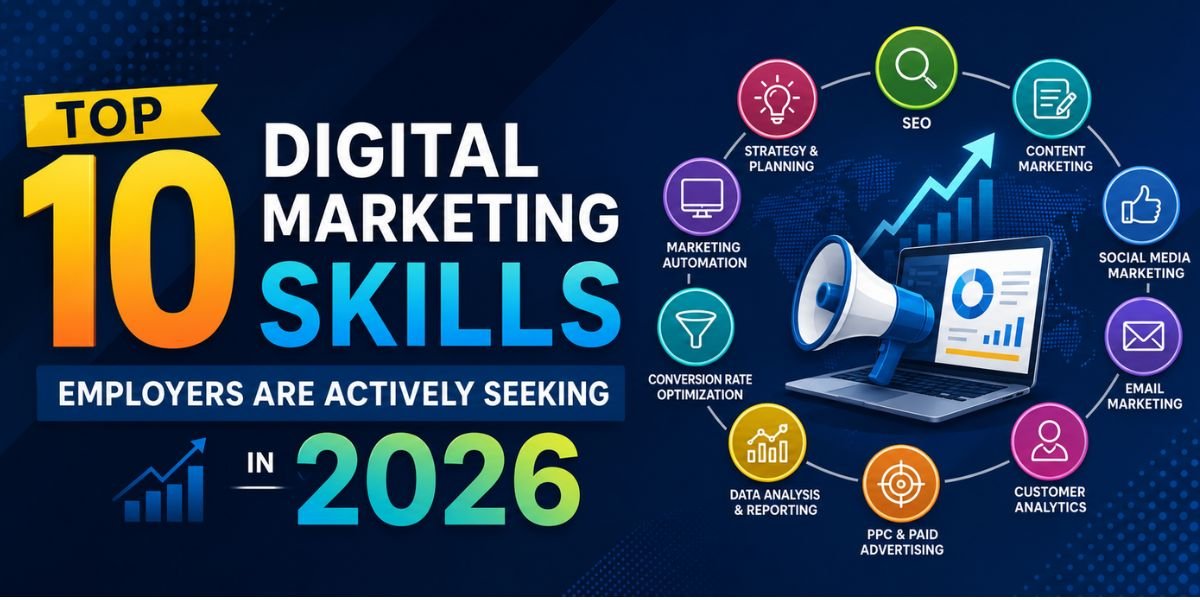
This article is my deep dive into the absolute top 10 digital marketing skills that are not just in demand, but are proving to be indispensable for professionals aiming to thrive in 2026. We’ll go beyond the surface-level buzzwords and explore what these skills really mean in practice, why they matter so much to employers, and how you can hone them to become an invaluable asset to any organization. Forget the fear of being outdated; by focusing on these core competencies, you’ll be future-proofing your career.
1. Data Analysis and Interpretation: The New Marketing Compass
If there’s one skill that has ascended to the absolute pinnacle of importance in digital marketing, it’s the ability to not just collect data, but to truly analyze and interpret it. In 2026, data isn’t just a byproduct of marketing efforts; it’s the compass that guides every decision. Employers are drowning in data from websites, social media, email campaigns, CRM systems, and a myriad of other sources. What they desperately need are individuals who can swim in this ocean of information and pull out actionable insights.
This goes far beyond simply looking at vanity metrics like likes or impressions. True data analysis in 2026 involves understanding customer journey mapping, identifying key performance indicators (KPIs) that align with business goals, and using statistical tools to uncover trends, predict future behavior, and measure the return on investment (ROI) of marketing initiatives. Think about it: a campaign might have a high click-through rate, but if those clicks don’t translate into qualified leads or sales, it’s a wasted effort. A data analyst can identify this disconnect and pivot the strategy accordingly.
Why Employers Crave This Skill:
- ROI Justification: Marketing budgets are always scrutinized. The ability to demonstrate tangible results through data is crucial for securing and increasing investment.
- Informed Decision-Making: Data-driven decisions minimize risk and maximize the chances of success. Employers want marketers who can back up their strategies with evidence, not just gut feelings.
- Personalization at Scale: Understanding customer data allows for highly personalized marketing messages and offers, leading to increased engagement and conversion rates.
- Predictive Analytics: Advanced analysis can help forecast market trends, customer behavior, and campaign performance, allowing businesses to get ahead of the curve.
How to Hone This Skill:
- Master Analytics Platforms: Become proficient in tools like Google Analytics 4, Adobe Analytics, and various social media analytics dashboards.
- Learn Data Visualization: Tools like Tableau or Power BI can help translate complex data into easily understandable reports and dashboards.
- Understand Statistical Concepts: Familiarize yourself with basic statistical principles, A/B testing methodologies, and hypothesis testing.
- Focus on Business Objectives: Always tie your data analysis back to the overarching business goals. Ask yourself: “What does this data tell us about how we can achieve X?”
2. Artificial Intelligence (AI) and Machine Learning (ML) Literacy
Artificial Intelligence (AI) and Machine Learning (ML) are no longer futuristic concepts; they are integral components of the modern marketing tech stack. In 2026, employers aren’t necessarily expecting every digital marketer to be a data scientist who can code complex algorithms. However, they are looking for individuals who possess a strong AI and ML literacy. This means understanding what AI and ML can do, how these technologies are being applied in marketing, and how to leverage AI-powered tools effectively.
From AI-driven content optimization and predictive lead scoring to hyper-personalized ad targeting and automated customer service chatbots, AI is transforming every facet of digital marketing. Marketers who can understand the capabilities of these tools, integrate them into their strategies, and interpret their outputs will have a significant advantage. This includes knowing how to prompt generative AI for content creation, understanding the ethical implications of AI in marketing, and recognizing when AI can augment human creativity and strategy rather than replace it.
Why Employers Crave This Skill:
- Efficiency and Automation: AI can automate repetitive tasks, freeing up marketers to focus on strategy and creativity.
- Enhanced Personalization: AI algorithms can analyze vast amounts of data to deliver highly tailored customer experiences.
- Improved Campaign Performance: AI can optimize ad spend, identify high-potential audiences, and predict campaign outcomes with greater accuracy.
- Competitive Advantage: Companies that effectively integrate AI into their marketing efforts will outperform those that don’t.
How to Hone This Skill:
- Explore AI Marketing Tools: Experiment with AI-powered platforms for content generation (like those from OpenAI or Google), ad optimization (like Google Ads Smart Bidding), and customer service (chatbots).
- Stay Informed: Read industry publications and follow thought leaders discussing AI in marketing. Understand the latest advancements and applications.
- Understand the Fundamentals: Learn the basic concepts behind AI and ML, even if you don’t code. Understand terms like algorithms, neural networks, and natural language processing.
- Focus on Ethical AI: Be aware of the ethical considerations surrounding AI in marketing, such as data privacy, bias, and transparency.
3. Content Strategy and Creation: Telling Compelling Stories
While the platforms and tools may change, the fundamental need for compelling content remains a constant. In 2026, employers are looking for marketers who can develop and execute a strategic content plan that resonates with their target audience and drives business objectives. This is more than just churning out blog posts or social media updates; it’s about understanding the customer’s needs, crafting narratives that address those needs, and distributing that content across the right channels at the right time.
A strong content strategist understands buyer personas, SEO best practices for content optimization, content distribution channels, and content performance measurement. They can create various content formats – from engaging blog articles and persuasive website copy to captivating video scripts and interactive social media posts. Crucially, they know how to tailor the message and tone to the specific platform and audience segment. The ability to create content that is not only informative and engaging but also drives conversions is a highly sought-after skill.
Why Employers Crave This Skill:
- Brand Building and Authority: High-quality content establishes a brand as a thought leader and builds trust with potential customers.
- SEO Performance: Well-optimized content is crucial for organic search rankings, driving valuable, free traffic to a website.
- Lead Generation and Nurturing: Content can attract leads, educate them about products or services, and guide them through the sales funnel.
- Audience Engagement: Valuable content keeps audiences engaged, fostering loyalty and encouraging repeat business.
How to Hone This Skill:
- Master Storytelling: Learn the principles of narrative structure and how to craft compelling stories that connect with an audience on an emotional level.
- Understand SEO Fundamentals: Deepen your knowledge of keyword research, on-page optimization, and content structure for search engines.
- Practice Different Formats: Experiment with writing blog posts, website copy, social media captions, video scripts, and even basic graphic design for visual content.
- Develop a Strategic Mindset: Learn to plan content calendars, map content to the buyer’s journey, and set measurable goals for your content efforts.
4. SEO and SEM Expertise: Driving Organic and Paid Traffic

Search Engine Optimization (SEO) and Search Engine Marketing (SEM) remain cornerstones of digital marketing. In 2026, employers are looking for professionals who have a deep understanding of how to make websites visible and accessible to search engines (SEO) and how to leverage paid search advertising to drive targeted traffic (SEM). This isn’t just about stuffing keywords; it’s a nuanced discipline that involves technical optimization, content relevance, user experience, and strategic paid campaign management.
SEO experts understand algorithm updates, technical SEO audits, keyword research, link building strategies, and local SEO. They know how to optimize website architecture, improve page speed, and ensure content is easily crawlable by search engines. SEM professionals, on the other hand, are masters of platforms like Google Ads and Bing Ads. They can develop effective keyword strategies, craft compelling ad copy, manage bidding strategies, optimize landing pages, and meticulously track campaign performance to maximize ROI. The synergy between strong SEO and effective SEM is a powerful driver of business growth.
Why Employers Crave This Skill:
- Visibility and Discoverability: Essential for ensuring potential customers can find a business when they search for relevant products or services.
- Targeted Traffic: Both SEO and SEM allow businesses to attract highly qualified leads who are actively looking for solutions.
- Cost-Effectiveness: SEO provides organic, free traffic, while well-managed SEM campaigns can offer a high ROI.
- Competitive Edge: Outranking competitors in search results is a significant advantage.
How to Hone This Skill:
- Study SEO Best Practices: Regularly review resources from Google Search Central and other reputable SEO authorities. Understand factors like E-E-A-T (Experience, Expertise, Authoritativeness, Trustworthiness).
- Master Keyword Research Tools: Become proficient with tools like Google Keyword Planner, SEMrush, or Ahrefs.
- Learn Paid Search Platforms: Gain hands-on experience with Google Ads and Bing Ads, including campaign setup, ad group structuring, bidding strategies, and conversion tracking.
- Understand Analytics: Use Google Analytics and platform-specific analytics to monitor performance, identify trends, and optimize strategies.
5. Social Media Marketing and Community Management: Building Relationships

Social media has evolved from a simple broadcasting channel into a complex ecosystem for building relationships, fostering communities, and driving business outcomes. In 2026, employers are seeking social media marketers who can do more than just post updates. They need individuals who can develop comprehensive social media strategies, create engaging content tailored to each platform, manage online communities, and measure the impact of social media efforts on business goals.
This involves understanding the nuances of different platforms (e.g., TikTok, Instagram, LinkedIn, X), developing engaging content calendars, running targeted social media advertising campaigns, actively monitoring brand mentions, responding to comments and messages, and fostering positive interactions within online communities. Community management is particularly crucial, as it involves building loyalty, gathering feedback, and turning brand advocates into loyal customers. The ability to navigate online conversations, manage crises, and build genuine connections is invaluable.
Why Employers Crave This Skill:
- Brand Awareness and Engagement: Social media is a primary channel for reaching and interacting with target audiences.
- Customer Service and Support: Many customers turn to social media for quick support and information.
- Lead Generation: Social media can be a powerful tool for driving traffic and capturing leads.
- Market Research and Feedback: Social listening provides valuable insights into customer sentiment and market trends.
How to Hone This Skill:
- Platform Proficiency: Deeply understand the algorithms, best practices, and advertising options for major social media platforms.
- Content Creation Skills: Develop skills in creating visually appealing graphics, engaging videos, and compelling copy suitable for social media.
- Communication and Interpersonal Skills: Practice active listening, empathetic communication, and effective conflict resolution for community management.
- Analytics and Reporting: Learn to track key social media metrics (engagement rate, reach, conversions) and report on their impact.
6. Email Marketing and Automation: Nurturing Leads Effectively
Despite the rise of new channels, email marketing remains one of the most effective and cost-efficient digital marketing tactics. In 2026, employers are looking for marketers who can go beyond sending generic newsletters. They need professionals who understand how to build targeted email lists, segment audiences, craft personalized and persuasive email campaigns, and leverage marketing automation to nurture leads and retain customers.
This involves understanding email marketing platforms (like Mailchimp, HubSpot, or Constant Contact), designing visually appealing and mobile-responsive emails, writing compelling subject lines and copy, implementing A/B testing for optimization, and setting up automated workflows (e.g., welcome series, abandoned cart reminders, re-engagement campaigns). The ability to measure email performance (open rates, click-through rates, conversion rates) and use that data to continuously improve campaigns is critical.
Why Employers Crave This Skill:
- Direct Communication Channel: Email provides a direct line of communication with customers and prospects.
- High ROI: Email marketing consistently delivers a strong return on investment compared to other channels.
- Lead Nurturing: Automated email sequences can guide prospects through the sales funnel, increasing conversion rates.
- Customer Retention: Email is effective for keeping existing customers engaged and encouraging repeat purchases.
How to Hone This Skill:
- Master Email Marketing Platforms: Become proficient with popular email marketing and automation tools.
- Learn Copywriting and Design Principles: Understand how to write persuasive email copy and create visually appealing, mobile-friendly email templates.
- Understand Segmentation and Personalization: Learn how to segment email lists based on customer data and personalize messages for maximum impact.
- Study Automation Workflows: Design and implement automated email sequences for various marketing objectives.
7. Conversion Rate Optimization (CRO): Turning Visitors into Customers
Having a great website and driving traffic is only half the battle. The other, often overlooked, half is ensuring that visitors actually take the desired actions – whether that’s making a purchase, filling out a form, or signing up for a newsletter. This is where Conversion Rate Optimization (CRO) comes in. In 2026, employers are actively seeking marketers who can systematically improve the percentage of website visitors who convert into customers.
CRO involves a blend of analytical skills, user psychology, and testing methodologies. It requires understanding user behavior through tools like heatmaps and session recordings, conducting A/B tests on website elements (headlines, calls-to-action, forms, page layouts), analyzing user feedback, and making data-backed recommendations for website improvements. A skilled CRO specialist can significantly boost a company’s revenue and lead generation without necessarily increasing marketing spend.
Why Employers Crave This Skill:
- Increased Revenue and Leads: Directly impacts the bottom line by improving the efficiency of existing traffic.
- Improved User Experience (UX): CRO often leads to a more intuitive and user-friendly website.
- Data-Driven Improvements: Relies on testing and data, minimizing guesswork and maximizing impact.
- Cost-Effective Growth: Achieves growth by optimizing existing assets rather than solely focusing on acquiring new traffic.
How to Hone This Skill:
- Learn A/B Testing Principles: Understand experimental design, statistical significance, and how to set up and interpret A/B tests.
- Utilize CRO Tools: Familiarize yourself with tools like Google Optimize (though sunsetting, principles apply), Optimizely, VWO, Hotjar, or Crazy Egg.
- Study User Psychology: Understand principles of persuasion, behavioral economics, and user interface (UI) design.
- Develop Analytical Skills: Learn to analyze website traffic data, user behavior patterns, and test results to identify optimization opportunities.
8. Digital Marketing Strategy and Planning: The Big Picture Thinker
While specialized skills are essential, employers also highly value marketers who can see the big picture and develop comprehensive digital marketing strategies. This involves understanding how various digital channels work together, aligning marketing efforts with overall business objectives, setting realistic goals, allocating budgets effectively, and creating integrated campaigns that deliver measurable results.
A strategic digital marketer doesn’t just execute tactics; they understand the ‘why’ behind them. They can conduct market research, analyze competitor strategies, identify target audiences, define value propositions, and map out a cohesive plan that leverages the right mix of channels and tactics to achieve specific business outcomes. This requires strong analytical, problem-solving, and communication skills, as well as a solid understanding of the entire digital marketing landscape.
Why Employers Crave This Skill:
- Alignment with Business Goals: Ensures marketing efforts directly contribute to the company’s success.
- Efficient Resource Allocation: Optimizes budget and team resources for maximum impact.
- Integrated Campaigns: Creates synergy between different marketing activities for a more powerful effect.
- Long-Term Vision: Develops a roadmap for sustained marketing success and growth.
How to Hone This Skill:
- Understand Business Fundamentals: Learn about business objectives, P&L statements, market dynamics, and competitive analysis.
- Study Marketing Frameworks: Familiarize yourself with models like the marketing funnel, customer journey mapping, and SWOT analysis.
- Practice Strategic Planning: Develop hypothetical marketing plans for businesses, outlining objectives, target audiences, channel strategies, and KPIs.
- Develop Project Management Skills: Learn to manage complex projects, timelines, and cross-functional teams.
9. User Experience (UX) and User Interface (UI) Design Principles
In the digital realm, the user experience (UX) and user interface (UI) are paramount. Employers in 2026 are increasingly looking for marketers who understand the principles of good UX/UI design, even if they aren’t designers themselves. This means understanding how users interact with websites and applications, how to create intuitive navigation, how to design clear calls-to-action, and how to ensure a seamless and enjoyable journey for the customer.
A marketer with UX/UI awareness can collaborate effectively with design and development teams, provide valuable feedback on website and app designs, and advocate for the user’s needs. They understand that a positive user experience leads to higher engagement, increased conversions, and greater customer loyalty. This skill bridges the gap between marketing strategy and technical implementation, ensuring that the user is always at the forefront.
Why Employers Crave This Skill:
- Improved Conversion Rates: Intuitive design makes it easier for users to complete desired actions.
- Enhanced Customer Satisfaction: A positive experience leads to happier, more loyal customers.
- Reduced Bounce Rates: Engaging and easy-to-navigate sites keep users on the page longer.
- Stronger Brand Perception: A well-designed digital presence reflects positively on the brand.
How to Hone This Skill:
- Study UX/UI Fundamentals: Learn about usability principles, information architecture, interaction design, and visual design.
- Analyze Websites and Apps: Critically evaluate the UX/UI of various digital products, identifying what works well and what could be improved.
- Understand User Research Methods: Learn about user interviews, surveys, and usability testing.
- Collaborate with Designers: Work closely with UX/UI designers to understand their process and provide marketing-informed input.
10. Adaptability and Continuous Learning: The Marketer’s Mindset
Perhaps the most crucial skill of all in the ever-evolving digital marketing landscape is adaptability and a commitment to continuous learning. The tools, platforms, and algorithms of 2026 will undoubtedly be different from those of 2027. Employers are looking for individuals who are curious, proactive in seeking new knowledge, and resilient in the face of change.
This means staying updated on industry trends, being willing to experiment with new technologies, embracing feedback, and learning from both successes and failures. A marketer who is adaptable and committed to learning will not only keep pace with the industry but will also be a valuable asset in navigating future disruptions and identifying emerging opportunities. This mindset is the bedrock upon which all other digital marketing skills are built and sustained.
Why Employers Crave This Skill:
- Future-Proofing: Ensures the marketing team remains relevant and effective as the landscape changes.
- Innovation: Drives the adoption of new technologies and strategies that can provide a competitive edge.
- Problem-Solving: Enables individuals to tackle new challenges with confidence and creativity.
- Resilience: Helps the team navigate the inevitable ups and downs of the digital marketing world.
How to Hone This Skill:
- Cultivate Curiosity: Actively seek out new information, ask questions, and explore different perspectives.
- Embrace Experimentation: Be willing to try new tools and tactics, even if they seem outside your comfort zone.
- Seek Feedback: Actively solicit feedback on your work and use it as an opportunity for growth.
- Dedicate Learning Time: Set aside regular time for reading industry blogs, taking online courses, attending webinars, and networking with peers.
Conclusion: Mastering the Digital Frontier in 2026
Frequently Asked Questions
Q1: With the rise of AI, will human marketers become obsolete?
No, absolutely not. While AI is transforming marketing by automating tasks and providing powerful insights, human marketers are more crucial than ever. AI can execute, but humans strategize, create compelling narratives, build genuine relationships, and understand the nuanced emotional drivers of consumer behavior. The most successful marketing in 2026 will be a collaboration between human ingenuity and AI efficiency. Employers are looking for marketers who can leverage AI tools, not be replaced by them.
Q2: How important is coding knowledge for digital marketers in 2026?
While a basic understanding of HTML/CSS can be beneficial, deep coding knowledge is generally not a primary requirement for most digital marketing roles in 2026. The focus is shifting towards understanding and utilizing marketing technologies and platforms, many of which are user-friendly and require configuration rather than custom coding. Proficiency in analytics, AI tools, and automation platforms is typically more highly valued than coding expertise, unless the role is specifically technical (e.g., marketing technologist).
Q3: I’m new to digital marketing. Which skill should I focus on first?
If you’re just starting, I’d recommend focusing on Content Strategy and Creation and SEO Fundamentals. Content is the fuel for all digital marketing, and understanding how to create valuable, engaging content that search engines can find is a foundational skill. Once you grasp those, you can branch out into areas like social media, email marketing, or paid advertising, always keeping data analysis in mind.
Q4: How can I demonstrate these skills on my resume if I don’t have direct experience?
Focus on quantifiable achievements from any relevant experience, even if it wasn’t a formal marketing role. Did you manage a club’s social media? Did you improve the visibility of a personal project online? Highlight those results. Consider personal projects, volunteer work, or freelance gigs. Completing online courses and certifications from reputable platforms (like Google, HubSpot, or Coursera) can also showcase your commitment and knowledge. Building a personal website or blog where you can demonstrate your skills in action is also highly effective.
Q5: With so many platforms, how do I choose which social media platforms to focus on?
The key is to understand your target audience and where they spend their time. Don’t try to be everywhere. Research which platforms are most relevant to the industry or companies you’re interested in. For B2B marketing, LinkedIn is often crucial. For visually driven products, Instagram and TikTok might be more effective. For broader reach, Facebook remains significant. Focus on mastering 1-2 platforms deeply rather than spreading yourself too thin across many.
Q6: How can I stay updated with the constant changes in digital marketing?
Dedicate time each week to reading industry blogs (like Search Engine Journal, MarketingProfs, Social Media Examiner), following thought leaders on LinkedIn and X, listening to marketing podcasts, and subscribing to relevant newsletters. Attend webinars and virtual conferences when possible. Networking with other professionals can also provide valuable insights into emerging trends and best practices. The most important thing is to cultivate a mindset of continuous learning and curiosity.