Did you know that the global digital marketing industry is projected to reach over $1 trillion by 2027? That’s a massive and growing field, brimming with opportunities for those eager to learn and contribute. But what if you’re looking to jump in and find your very first role without any prior professional experience? It might sound daunting, but I’m here to tell you it’s absolutely achievable. I’ve seen it happen, and with the right strategy, you can too. This guide is your roadmap to navigating the entry-level digital marketing landscape and landing that coveted first job.
The Digital Marketing Landscape: What It Is and Why It Matters
Before we dive into the “how,” let’s quickly touch upon the “what.” Digital marketing is essentially the practice of promoting products or services using digital channels. Think websites, social media, search engines, email, and mobile apps. It’s about connecting with potential customers where they spend their time – online.
Why is it so important? In today’s interconnected world, businesses need to have a strong online presence. They need to be found when people search for what they offer, engage with them on platforms they use, and build relationships that lead to conversions. This is where digital marketers come in. They are the strategists, the creators, and the analysts who make it all happen.
Building Your Foundation: Essential Skills and Knowledge
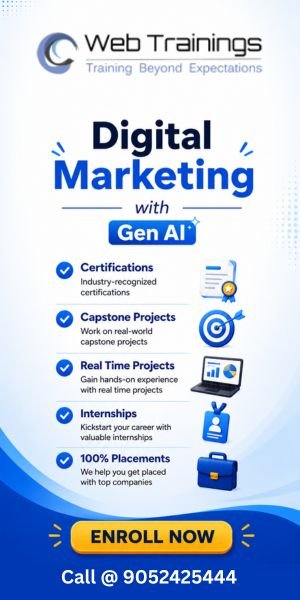
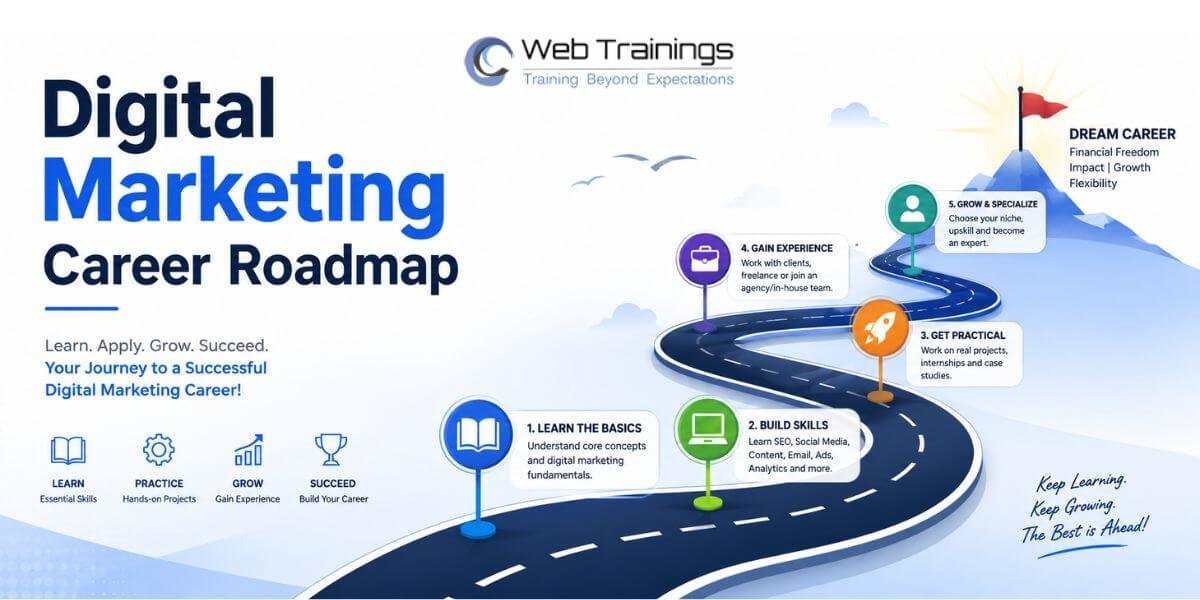
Even without formal experience, you can start building a strong foundation of skills. The beauty of digital marketing is that many of its core components are accessible for self-study. You can also join professional training @ Web Trainings and learn advanced digital marketing course in hyderabad with internship.
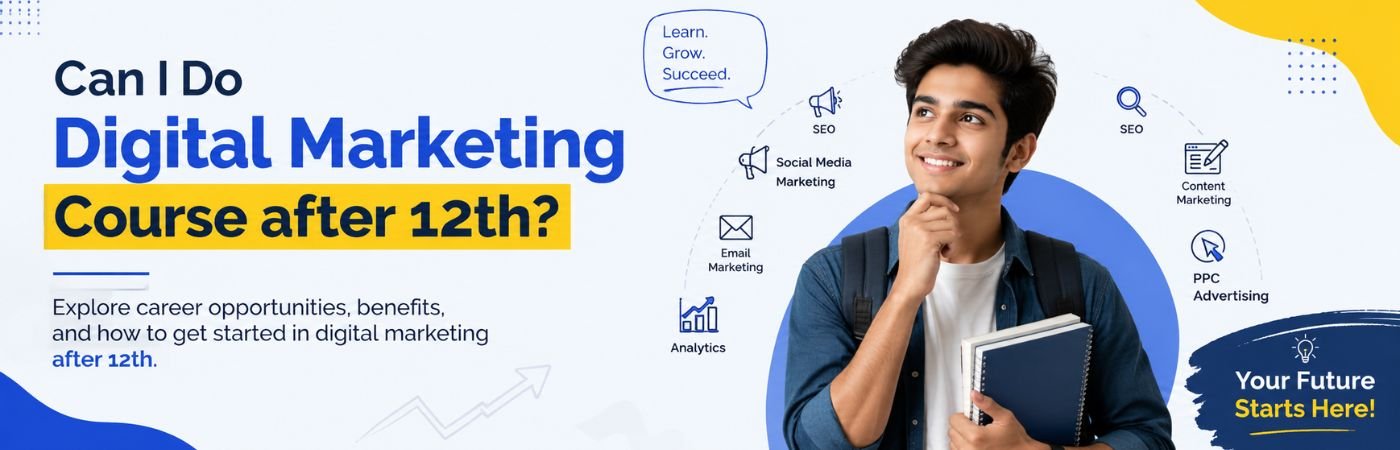
Core Digital Marketing Disciplines to Understand
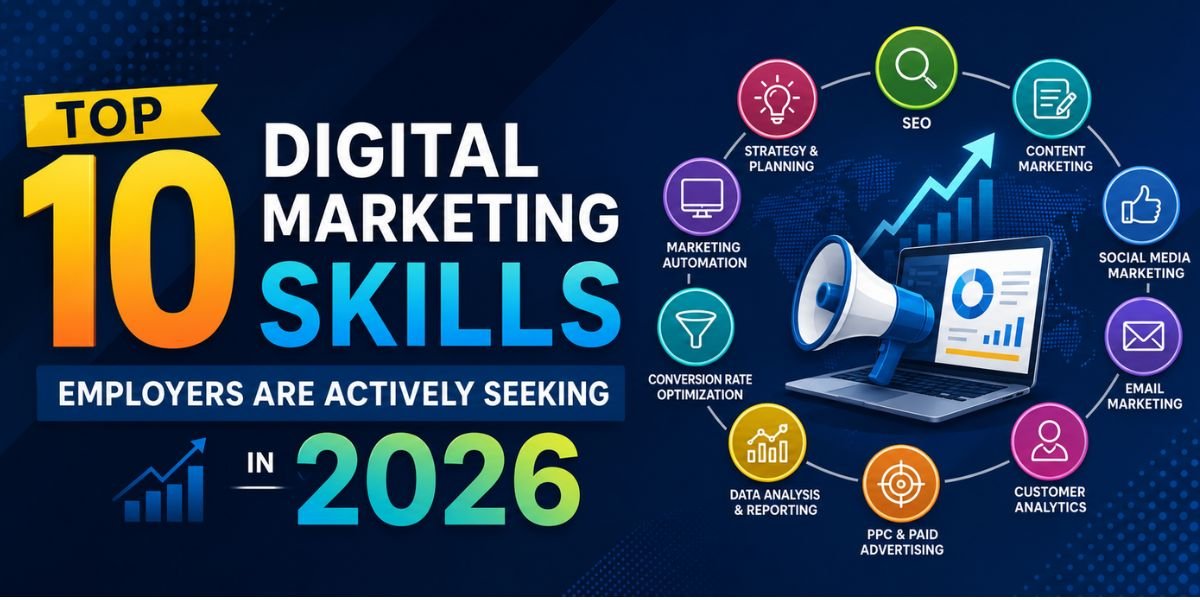
- Search Engine Optimization (SEO): This is all about making websites more visible in search engine results pages (SERPs). Think of it as helping people find what they’re looking for on Google. It involves understanding keywords, on-page optimization, off-page factors, and technical SEO.
- Content Marketing: This involves creating and distributing valuable, relevant, and consistent content to attract and retain a clearly defined audience. Blogs, videos, infographics, and podcasts are all part of this.
- Social Media Marketing (SMM): This focuses on using social media platforms (like Facebook, Instagram, Twitter, LinkedIn, TikTok) to promote a product or service, build brand awareness, and drive traffic.
- Paid Advertising (PPC/SEM): This involves running paid campaigns on platforms like Google Ads or social media ads. It’s about bidding on keywords or targeting specific demographics to get your message in front of the right eyes.
- Email Marketing: This is a direct way to communicate with your audience, nurturing leads and building customer loyalty through targeted email campaigns.
- Analytics and Data Interpretation: This is crucial. You need to be able to track the performance of your campaigns, understand what the data means, and use those insights to make improvements. Tools like Google Analytics are indispensable here.
Acquiring Skills Without a Formal Job
So, how do you gain these skills when you haven’t been hired yet?
- Online Courses and Certifications: This is your absolute best friend. Platforms like Coursera, Udemy, HubSpot Academy, Google Digital Garage, and LinkedIn Learning offer a wealth of courses, many of which are free or very affordable. Look for courses that offer certifications, as these can be valuable additions to your resume. Google’s own certifications (e.g., Google Analytics, Google Ads) are particularly well-regarded.
- Read Industry Blogs and Publications: Stay updated by following leading digital marketing blogs. Examples include Search Engine Journal, Moz, Neil Patel’s blog, and MarketingProfs. Understanding current trends and best practices is key.
- Listen to Podcasts: There are fantastic podcasts out there covering every facet of digital marketing. They’re a great way to learn while commuting or exercising.
- Follow Experts on Social Media: Many digital marketing leaders share valuable insights and tips on platforms like LinkedIn and Twitter.
Building Your Portfolio: Demonstrating Your Abilities
This is arguably the most important step when you have no professional experience. You need to show potential employers what you can do, not just tell them.
Personal Projects are Your Secret Weapon
- Start a Blog: Choose a topic you’re passionate about and start a blog. This is your sandbox to practice SEO, content creation, and social media promotion. You can even experiment with basic website analytics.
- Manage Social Media for a Friend’s Business or Non-Profit: Offer your services pro bono to a small local business, a friend’s startup, or a charity. Document your efforts, the strategies you used, and the results you achieved.
- Create a Website: Even a simple website built on platforms like WordPress or Wix can be a demonstration of your understanding of website structure, user experience, and basic content management.
- Run a Small Ad Campaign (with a tiny budget): If you have even $20-$50, you could set up a small, targeted ad campaign on Facebook or Google Ads for a personal project. Document the setup, targeting, ad copy, and any results.
- Volunteer for a Cause: Many non-profits are always looking for help with their online presence. This is a fantastic way to gain real-world experience and network.
Quantify Your Results
When you document your projects, always focus on measurable results. Instead of saying “I managed their social media,” say “I increased their Instagram engagement rate by 15% over three months by implementing a consistent posting schedule and engaging with followers.” Numbers speak volumes.
Crafting Your Application Materials
Your resume and cover letter are your first impression. They need to be tailored to highlight your burgeoning skills and enthusiasm.
The “Zero Experience” Resume
- Focus on Skills and Projects: Since you don’t have traditional job experience, make your “Skills” section prominent. List all the digital marketing disciplines you’ve learned about and practiced.
- Create a “Projects” or “Portfolio” Section: This is where you detail your personal projects. For each project, include:
A brief description of the project. The skills you utilized (e.g., SEO, content writing, social media management). The results you achieved (quantify them!). A link to the project if applicable (e.g., your blog, a live website).
- Highlight Certifications: List any relevant online courses and certifications you’ve completed.
- Use Keywords: Look at job descriptions for entry-level roles and incorporate relevant keywords into your resume.
- Emphasize Transferable Skills: Think about your previous work (even if not in marketing), education, or volunteer roles. Did you do customer service? That’s communication. Did you manage a team? That’s leadership. Did you organize an event? That’s project management. Highlight these.
The Compelling Cover Letter
Your cover letter is your chance to tell your story and explain your passion.
- Show, Don’t Just Tell: Instead of saying “I’m passionate about digital marketing,” explain why. Mention a specific campaign that inspired you, a blog post that changed your perspective, or how your personal projects solidified your interest.
- Address the “Lack of Experience” Head-On: Acknowledge it briefly and pivot to your proactive efforts. “While I may not have formal professional experience in digital marketing, I have actively pursued learning through [mention courses, certifications, personal projects] to build a strong foundational understanding and practical skills.”
- Tailor Each Letter: Never send a generic cover letter. Research the company and the specific role. Mention something specific about their work that appeals to you or how your skills could help them.
- Connect Your Projects to Their Needs: If you’re applying for a role that emphasizes social media, highlight your social media projects and the results you achieved.
Networking: It’s Not About Who You Know, But Who Knows You
Networking can feel intimidating, especially when you’re just starting. But it’s incredibly powerful.
Online Networking
- LinkedIn: This is your primary tool.
Optimize Your Profile: Make sure your LinkedIn profile is complete, professional, and highlights your skills and projects. Connect Strategically: Connect with people in the digital marketing industry. Send personalized connection requests explaining why you’d like to connect (e.g., you admire their work, you’re interested in their company, you’re an aspiring marketer). Engage with Content: Like, comment on, and share posts from industry leaders and companies. This increases your visibility. Join Groups: Participate in relevant LinkedIn groups to ask questions, share insights, and learn from others.
- Twitter: Follow digital marketing professionals and engage in conversations.
Offline Networking (When Possible)
- Industry Events and Meetups: Look for local or virtual digital marketing meetups, conferences, or webinars. These are great places to meet people face-to-face (or screen-to-screen) and learn about opportunities.
- Informational Interviews: Reach out to people working in roles or companies that interest you and ask if they’d be willing to have a brief chat about their career path and advice for someone starting out. This isn’t asking for a job directly, but rather for insights. It can often lead to valuable connections and even job leads.
The Job Search: Targeting the Right Roles
When you’re starting, focus on roles that are designed for entry-level talent.
What to Look For
- “Junior” or “Entry-Level” Titles: Look for job titles like “Junior Digital Marketing Assistant,” “Digital Marketing Coordinator,” “Marketing Intern,” “Social Media Assistant,” or “SEO Assistant.”
- Focus on Learning and Growth: Companies that explicitly mention training, mentorship, or opportunities for growth are ideal.
- Smaller Agencies or Startups: These environments often provide broader exposure to different aspects of digital marketing and can be more open to hiring motivated individuals without extensive experience.
Ace the Interview
- Research the Company: Understand their business, their target audience, their current marketing efforts, and their competitors.
- Prepare Your “Why”: Be ready to articulate why you’re passionate about digital marketing and why you want to work for this specific company.
- Be Ready to Talk About Your Projects: This is where your portfolio shines. Walk them through your personal projects, explaining your process, your strategy, and the results you achieved.
- Ask Insightful Questions: Prepare questions about the role, the team, company culture, and opportunities for learning and development. This shows your engagement and interest.
- Show Enthusiasm and a Willingness to Learn: Employers hiring for entry-level roles are often looking for potential and a great attitude as much as existing skills.
Persistence and Patience: The Keys to Success
Landing your first job can take time. Don’t get discouraged by rejections. Each application, each interview, is a learning experience. Keep refining your approach, continue learning, and stay persistent. The digital marketing world is dynamic and welcoming to those who show drive and a genuine interest in making an impact.
Frequently Asked Questions
What are the most in-demand entry-level digital marketing skills in 2026?
In 2026, employers are highly valuing skills in SEO, content creation (including video and graphic design basics), social media management, data analysis (especially with tools like Google Analytics), and basic proficiency in paid advertising platforms like Google Ads and Meta Ads.
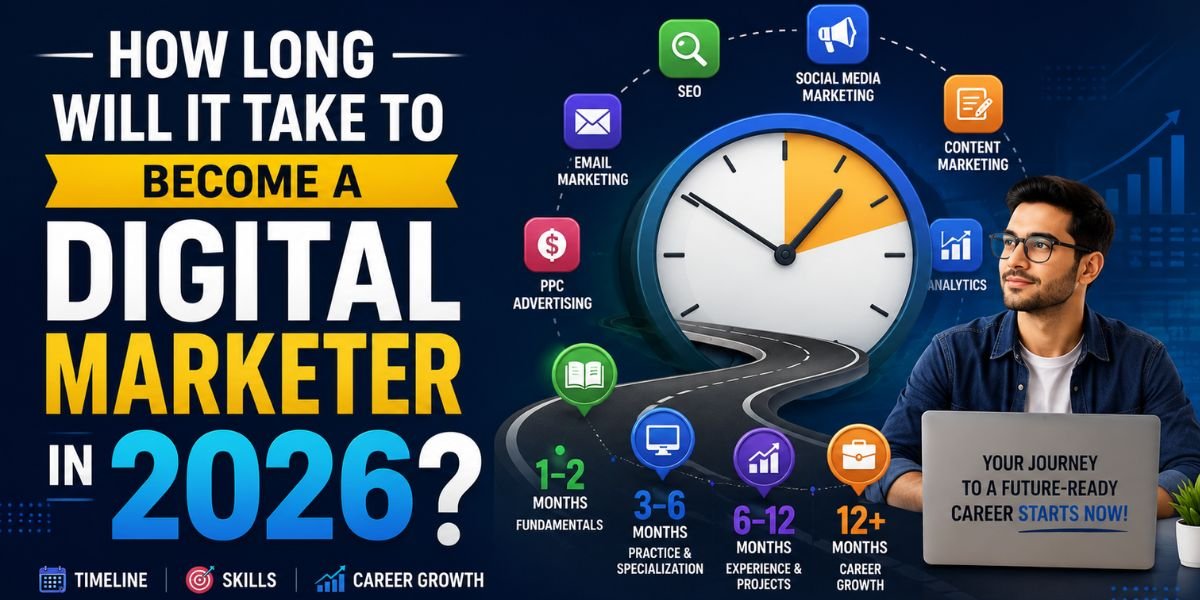
How long does it typically take to land a first digital marketing job with no experience?
This varies greatly depending on individual effort, networking, and the job market. Some individuals may find roles within a few months of dedicated effort, while others might take six months to a year. Persistence is key.
Should I get a degree in digital marketing?
While a degree can be beneficial, it’s not always a strict requirement for entry-level digital marketing roles, especially with the abundance of online courses and certifications available. Practical skills and a strong portfolio often carry more weight for those without prior experience.
What kind of salary can I expect for an entry-level digital marketing position?
Salaries for entry-level digital marketing roles in 2026 can range significantly based on location, company size, and specific responsibilities. Entry-level positions often start in the range of2.5 LPA to 5 LPA depends on skills and qualification.
How important is a portfolio when applying for a digital marketing job with no experience?
A portfolio is crucial. It’s your primary tool for demonstrating your skills and understanding when you lack traditional work experience. It provides tangible proof of your abilities.
What are some common mistakes people make when trying to get their first digital marketing job?
Common mistakes include not tailoring their resume and cover letter, failing to build a portfolio, not networking effectively, applying for roles they aren’t qualified for, and lacking enthusiasm or a clear understanding of the industry.
Conclusion
Breaking into the digital marketing field without prior experience is a journey that requires dedication, proactive learning, and strategic effort. By focusing on building a strong foundational knowledge, creating a compelling portfolio through personal projects, networking effectively, and tailoring your job applications, you can position yourself as a strong candidate. Remember that the digital marketing industry is constantly evolving, so a commitment to continuous learning is paramount. Your first job is within reach, go get it!