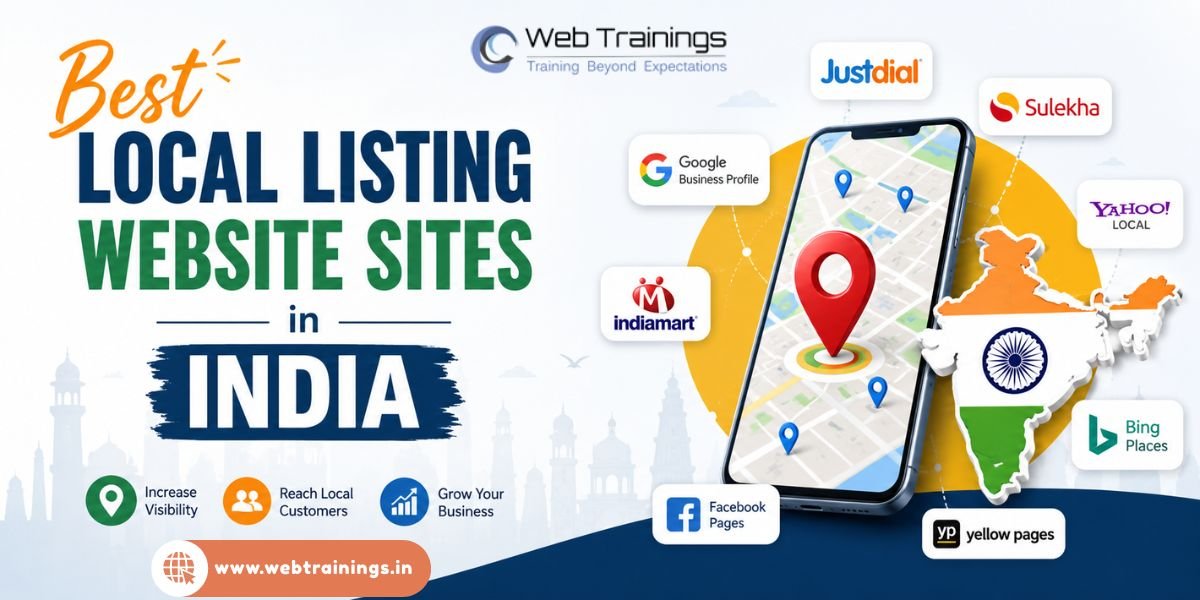
In today’s digital-first economy, having an online presence is no longer optional for Indian businesses it is a necessity. Whether you run a small coaching institute in Hyderabad, a retail shop in Mumbai, or a service agency in Bangalore, local listing directories are one of the most powerful and cost-effective tools to make your business discoverable online.
Local listing directories are online platforms where businesses can create a profile, add their contact details, describe their services, and get found by potential customers searching in their area. Beyond customer discovery, these directories are also a cornerstone of SEO (Search Engine Optimization) strategy each listing creates a valuable backlink that signals to Google that your website is trustworthy and authoritative.
This comprehensive guide covers everything you need to know about local listing directories in India: what they are, why they matter, which ones are worth your time, and exactly how to use them to grow your business.
What Are Local Listing Directories?
A local listing directory is an online database of businesses, organised by category, location, or industry. Think of it as the digital successor to the traditional Yellow Pages but far more powerful, interactive, and discoverable through search engines.
A typical business listing includes:
- Business name, address, and phone number (NAP)
- Website URL and social media links
- Business hours and location map
- Customer reviews and ratings
- Photos, videos, and service descriptions
- Category tags and keywords
When your business is listed accurately and consistently across multiple directories, search engines like Google view your business as legitimate, established, and geographically relevant. This directly improves your local search rankings.
Why Local Listings Are Critical for Indian Businesses
India has over 900 million internet users and a rapidly growing base of local searchers people who type queries like “digital marketing course near me,” “best restaurant in Banjara Hills,” or “plumber in Koramangala” into Google every day. Local listings directly connect your business to these high-intent searches.
1. Improve Local SEO Rankings
Google’s local ranking algorithm gives significant weight to NAP consistency your Name, Address, and Phone number appearing identically across multiple trusted directories. Businesses listed on high-authority directories rank higher in Google Maps and local search results.
2. Build High-Quality Backlinks
Every directory listing creates a backlink to your website. Listings on platforms with high Domain Authority (DA) like JustDial (DA 89), IndiaMart (DA 86), or Sulekha (DA 78) pass significant “link juice” to your site, strengthening your overall SEO profile.
3. Increase Brand Visibility & Trust
When potential customers see your business listed on multiple trusted platforms with consistent information and positive reviews, it builds credibility. Many Indian consumers specifically check JustDial or Sulekha before making a purchase decision.
4. Generate Direct Leads
Directories like UrbanPro, Sulekha, and JustDial are not just citation sources they actively generate enquiries and leads for businesses. Many training institutes, home services providers, and professionals in India receive a significant portion of their leads directly through these platforms.
5. Zero-Cost Marketing Channel
Most local directories offer a free basic listing. For a business with a limited marketing budget, this is an incredibly high-ROI activity a few hours of work can generate backlinks, brand mentions, and leads for years.
Top 25+ Local Listing Directories in India
The following table lists the most important directories, their Domain Authority scores, and what they are best used for:
| Directory Name | Domain Authority | Category | Best For |
| Google.com/mybusiness | 99 | Business Listing | Local Business |
| Bing.com/maps/myplaces/ | 99 | Business Listing | Local Business |
| JustDial.com | 89 | General / Local | Leads & local discovery |
| Sulekha.com | 78 | Services & Courses | Training & home services |
| IndiaMart.com | 86 | B2B / Products | Product & supplier listings |
| TradeIndia.com | 72 | B2B / Trade | Wholesale & trade |
| UrbanPro.com | 72 | Education & Tutoring | Coaching & training institutes |
| Shiksha.com | 79 | Education | Courses & colleges |
| CollegeDekho.com | 68 | Education | Institutes & admissions |
| Careers360.com | 74 | Education | College & course reviews |
| CollegeDunia.com | 72 | Education | College comparisons |
| YellowPages.in | 60 | General | Local business listings |
| AskLaila.com | 58 | General / Local | Local services |
| ClickIndia.com | 62 | Classifieds | Classifieds & services |
| ExportersIndia.com | 64 | B2B / Export | Exporters & manufacturers |
| BusinessList.in | 48 | General | Local business profiles |
| MapsoIndia.com | 65 | Local & Travel | Location-based listing |
| Opendi.in | 45 | Local | Hyperlocal listings |
| StartupIndia.gov.in | 82 | Startups / Govt | Government-verified listing |
| MSME.gov.in | 78 | MSME / Govt | MSME registration & listing |
| Udyam Registration | 80 | MSME / Govt | Official MSME directory |
| IndiaStudyChannel.com | 62 | Education | Student & institute community |
| EduGorilla.com | 58 | Education | Exam prep & institutes |
| CoachingSelect.com | 48 | Education | Coaching directory |
| Superprof.co.in | 65 | Tutors & Training | Tutors & course instructors |
| HotFrog.in | 58 | Business Listing | Good for any local business |
| Dial4Trade.com | 50 | B2B / Trade | Trade & supplier listing |
How to Create an Effective Local Business Listing
Simply submitting your website URL is not enough. To get maximum SEO and lead-generation value from each directory, follow these best practices:
Step 1: Prepare Your NAP Details
Before submitting to any directory, write down your business Name, Address, and Phone number in a single standardised format. This exact same text should be used on every directory, your website, and your Google Business Profile. Even small differences like “Road” vs “Rd” can confuse search engines and dilute your local SEO signals.
Step 2 : Write a Keyword-Rich Business Description
Write a 150 – 300 word description of your business that naturally includes your target keywords. For example, if you run a digital marketing training institute in Hyderabad, your description should include phrases like “digital marketing course in Hyderabad,” “best digital marketing training,” and “SEO and social media training.” Avoid keyword stuffing write for humans first, search engines second.
Step 3 : Choose the Right Categories
Most directories allow you to select primary and secondary business categories. Choose the most specific category available. On JustDial, for example, selecting “Digital Marketing Training Institute” rather than just “Training Institute” will ensure you appear in the right searches.
Step 4 : Upload High-Quality Photos
Listings with photos receive significantly more clicks than those without. Upload at least 5–10 high-quality images: your office/classroom, your team, your certificate programmes, and student testimonials. Use descriptive filenames and alt text where possible.
Step 5 : Add Your Website URL Correctly
Always link to the most relevant page on your website not just the homepage. If the directory is for your Hyderabad digital marketing course, link directly to your course page. This passes more targeted link equity to that specific page.
Step 6 : Verify Your Listing
Most major directories require email or phone verification before your listing goes live. Complete the verification promptly. Unverified listings may not appear in search results and carry less trust signal.
Step 7 : Actively Collect Reviews
Reviews are one of the strongest ranking signals on local directories and Google Maps. After each training batch or customer interaction, ask satisfied clients to leave a review. Respond to all reviews both positive and negative professionally. Directories with active, recent reviews rank higher in their own internal search.
Common Mistakes to Avoid
Inconsistent NAP across directories is one of the top reasons local businesses fail to rank in Google Maps. Audit your listings at least once every six months.
- Mistake 1: Inconsistent NAP information across different directories
- Mistake 2: Using different phone numbers or addresses on different platforms
- Mistake 3: Submitting identical copy-pasted descriptions to every directory (use unique content where possible)
- Mistake 4: Ignoring customer reviews and failing to respond to them
- Mistake 5: Listing your business in irrelevant categories just to gain backlinks
- Mistake 6: Creating duplicate listings on the same platform
- Mistake 7: Neglecting to update listings when your address, phone number, or hours change
- Mistake 8: Submitting to hundreds of low-quality spam directories this can harm SEO, not help it
Recommended Action Plan: 30-Day Local Listing Strategy
Week 1 : High Priority (Do These First)
- Set up or optimise Google Business Profile this is the single most important local listing
- Create or claim your listing on JustDial highest traffic local directory in India
- List on Sulekha critical for services and education businesses
- Create a profile on UrbanPro especially valuable for training institutes
- Register on Shiksha.com and CollegeDunia essential for education niche
Week 2 : Medium Priority
- Submit to IndiaMart and TradeIndia if you have a B2B component
- List on Careers360 and CollegeDekho
- Register with StartupIndia.gov.in and MSME portal for government-backed credibility
- Create listings on YellowPages.in and ClickIndia
Week 3 Supplementary Listings
- Submit to remaining education directories: EduGorilla, CoachingSelect, IndiaStudyChannel
- Add listings to B2B directories: Bizbilla, Dial4Trade, ExportersIndia
- Complete profiles on Superprof, Opendi, and BusinessList
Week 4 : Monitor & Optimise
- Audit all submitted listings for NAP consistency
- Send review requests to existing students and customers
- Check Google Search Console to see if organic impressions have increased
- Set a monthly calendar reminder to respond to new reviews
Measuring the Impact of Your Local Listings
After completing your listings, track the following metrics to measure their impact:
- Google Search Console: Monitor impressions and clicks for local keywords
- Google Business Profile Insights: Track profile views, direction requests, and calls
- Ahrefs or SEMrush: Track new backlinks from directory domains
- Directory dashboards: Most platforms (JustDial, UrbanPro) show lead and enquiry counts
- Website analytics: Monitor referral traffic from each directory using UTM parameters
Pro Tip: Use a free tool like Moz Local, BrightLocal, or Whitespark to audit your NAP consistency across directories and identify any duplicate or incorrect listings.
Conclusion
Local listing directories are one of the most under utilised yet high-impact tools available to Indian businesses. For any local business, a well-executed local listing strategy can directly contribute to higher rankings for keywords in local area,” increased website authority, and a consistent stream of inbound leads.
The key to success is consistency, quality, and patience. Focus on the top 10–15 high-authority directories first, ensure your NAP is identical across all platforms, write compelling descriptions with relevant keywords, and actively build your review count. Over time, these signals compound, and the organic visibility gains are permanent.
Start today, track your results, and make local listings a core pillar of your digital marketing strategy.