In today’s digital marketing , Google Ads PPC is undoubtedly one of the most effective ways to reach customers and attract qualified prospects to your website. With millions of active users and billions of searches performed every day, Google PPC Ads provide an opportunity for businesses to be in front of the right people at the right time and are a key part of any digital marketing strategy that is going to succeed. This is an essential guide that will take you through everything you need to know about Google Ads PPC—from basics to advanced strategies that will help you optimize your campaign for the best results.
1. What Are Google Ads PPC?
At its very core, Google Ads PPC are paid advertisements which appear in search results when users search on keywords relevant to your business. The term “PPC” stands for “Pay Per Click,” meaning advertisers pay each time someone clicks on their ad. The ads can also appear on the Google’s SERP as well as across millions of partner sites of the Google Display Network.
Google Ads work on targeting keywords relevant to your business. When a user searches for the keywords, your ad may appear in the search results, which is usually at the top or bottom of the page. The aim is to drive traffic to your website, generate leads, or make sales-all while staying within your budget.
2. How Do Google Ads Work?
Google PPC Ads operate on a bidding system, where businesses bid for ad placement on Google. However, unlike traditional auctions, the highest bid doesn’t always win. Google uses a combination of your bid amount and Quality Score to determine your ad’s placement. Your Quality Score is influenced by factors such as:
- Ad relevance: How relevant your ad is to the keyword search.
- Landing page experience: How user-friendly and relevant your landing page is.
- Expected click-through rate (CTR): How likely users are to click on your ad.
The combination of your bid and Quality Score helps Google decide which ads appear on the search results page and in what order.
3. Why is Google Ads are Important for Businesses?
Whether you’re a small startup or a large enterprise, Google Ads Pay Per Click (PPC) Service can play a transformative role in driving your business growth. By leveraging PPC campaigns effectively, you can tap into a highly targeted audience, maximize your return on investment, and achieve measurable results.
1. Instant Results
Unlike SEO, which may take some time to yield results, PPC campaigns can begin delivering immediate results once they go live. Your ads will appear at the top of search results or in social media feeds, instantly driving traffic to your website. This means you can start seeing visitors and potential customers right away.
2. Targeted Audience Reach
The largest benefit a PPC strategy yields is targeting at the highly targeted scale. On different PPC platforms, you are allowed to target at quite an intense range; that includes but is not limited to, location-based targeting, and even behavioral- targeting for highly advanced audiences at your preferred set time and specific interests.
3. Budget Control
With PPC, you are in complete control of your advertising budget. You can set daily or monthly budgets, pause campaigns, or allocate more funds to high-performing ads. This flexibility allows you to manage your ad spend effectively without overspending.
4. Measurable Performance
PPC offers detailed analytics so that you can track every aspect of your campaign’s performance. You can track clicks, impressions, conversion rates, and ROI (Return on Investment). It helps you know what works and what doesn’t, allowing you to refine your campaigns for better results.
5. Builds Brand Awareness
Even when people don’t click on your ads, just seeing your brand name repeatedly in search results or on websites builds familiarity and trust over time. This exposure helps build brand awareness, making your business more recognizable and memorable to potential customers.
To be able to utilize these advantages, it is necessary to learn PPC strategies from experts. Consider joining the digital marketing course in Hyderabad by Web Trainings Academy where you can acquire industry-relevant skills and insights.
4. Types of PPC Campaigns and Their Importance
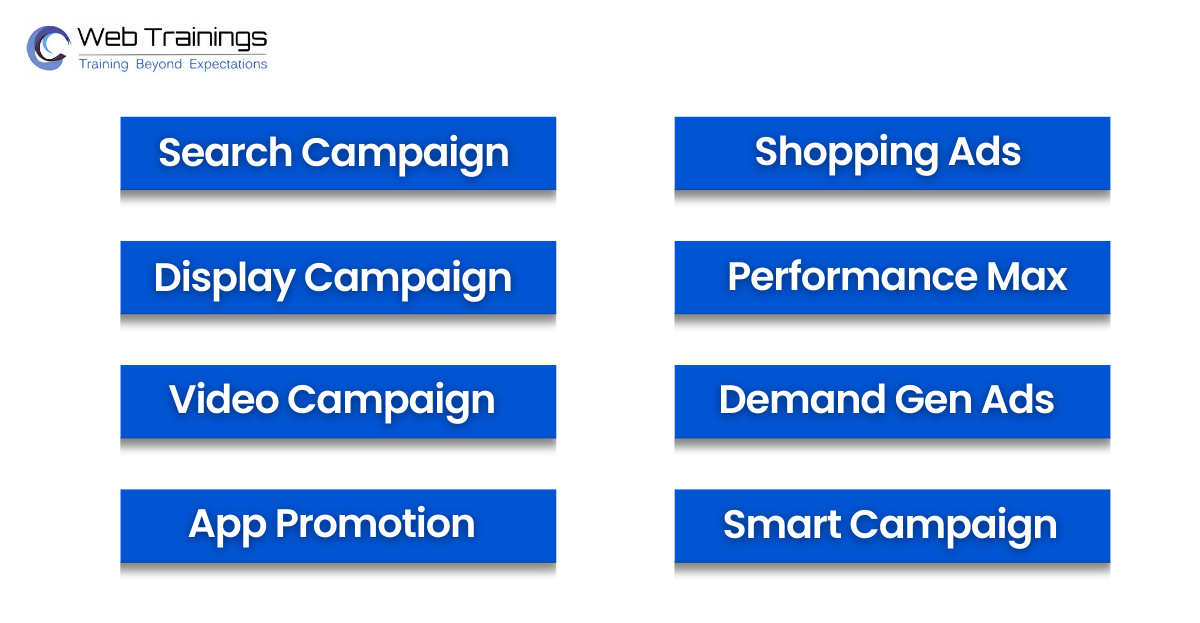
Choosing the right type of PPC campaign is crucial for meeting your marketing goals. Here’s a more detailed look at the most common PPC campaign types and why they matter:
1. Search Ads
Search ads are text-based advertisements that appear on search engine results pages (SERPs) when users search for specific keywords.
Importance: Such ads are most suitable for businesses targeting users with high purchase intent. Since the ads appear in search results when people are actively looking for something related to your offerings, they are more likely to click and convert.
Best for: Service providers, local businesses, and lead generation. If you’re running a plumbing service or law firm, to name a couple, search ads can be incredibly helpful in getting in front of people searching for your services.
2. Display Ads
Display ads are visual banners that appear on various websites, apps, and YouTube. They include images, videos, or animations designed to grab attention.
Importance: Display ads are great for boosting brand awareness and engagement. They catch the eye of potential customers while they are browsing other websites, helping to keep your brand top-of-mind.
Best for: Reaching users in the awareness stage. If you’re introducing a new product or trying to build a brand, display ads can help you get noticed.
3. Shopping Ads
Shopping ads are specifically designed for e-commerce businesses. These ads showcase products along with their price, image, and description right on the SERPs.
Importance: Shopping ads simplify the buying process for users by showing product details directly in the search results, making it easier for them to make a purchase
Best for: Retail and e-commerce. If you sell products online, shopping ads can help drive sales by putting your products in front of interested buyers.
4. Social Media Ads
Social media ads appear on platforms like Facebook, Instagram, LinkedIn, and Twitter. They leverage user demographics and behaviors to deliver targeted messages.
Importance: Social media ads engage users in an interactive way, encouraging likes, shares, comments, and conversions. They are effective for building a community around your brand.
Best for: Brand awareness and community building. If you want to connect with your audience on a more personal level, social media ads can help you engage with them where they spend a lot of their time.
5. Remarketing Ads
Remarketing ads target users who have previously interacted with your website but didn’t convert. These ads remind users of your products or services as they browse other sites.
Importance: Remarketing ads encourage repeat visits and increase conversions by keeping your brand in front of users who have already shown interest.
Best for: Re-engaging potential customers. If someone visited your online store but didn’t make a purchase, remarketing ads can bring them back to complete their transaction.
6. Video Ads
Video ads are popular on platforms like YouTube and Facebook. They are excellent for storytelling, explaining complex products, and capturing audience attention.
Importance: Video ads build trust and captivate audiences with engaging content. They can be highly effective for demonstrating products and creating emotional connections with viewers.
Best for: High-engagement campaigns. If you have a compelling story to tell or a product that benefits from visual demonstration, video ads are the way to go.
7. App Promotion Ads
App promotion ads are designed to promote mobile apps, encouraging users to download and engage with the app.
Importance: These ads expand app visibility and drive downloads by reaching potential users on various platforms.
Best for: App-based businesses. If you have a mobile app that you want to promote, these ads can help you reach a broader audience and increase app installs.
These PPC campaign types offer unique advantages and can be tailored to fit different marketing objectives. By understanding their importance, you can choose the right campaigns to meet your business goals. If you want to master these strategies, consider enrolling in a Google Ads Course at Web Trainings Academy in Hyderabad.
5. Key Components of a Google Ads
Running a successful Pay-Per-Click campaign involves multiple components that work together to drive optimal results. Let’s break down the key elements of a campaign:
1. Keyword Research and Selection
The foundation of any successful Google Ads campaign is selecting the right keywords. Keyword research allows you to identify the search terms that potential customers are using to find products or services similar to yours. You can use tools like Google Keyword Planner to find relevant keywords with high search volume and low competition. It’s crucial to choose keywords that align with user intent. You can segment your keywords into different types of matches:
- Broad Match: Ads appear for any variation of the keyword.
- Phrase Match: Ads appear for search queries containing the exact phrase or close variations.
- Exact Match: Ads appear for search queries that exactly match the keyword.
2. Creating Compelling Ad Copy
Once you’ve selected your keywords, the next step is creating engaging ad copy. Your ad copy should highlight your unique value proposition (UVP) and include a clear call-to-action (CTA). A strong CTA motivates users to take immediate action, whether it’s clicking on your ad or making a purchase.
Your ad copy must also include the target keyword. This helps improve your ad’s relevance to the user’s search, contributing to a better Quality Score and increasing the chances of your ad being clicked.
3. Ad Extensions: Maximizing Your Ad’s Potential
Ad extensions allow you to provide more information in your ad, which can improve visibility and engagement. Some common types of Google Ads PPC extensions include:
- Sitelink Extensions: Add extra links to your ads, directing users to relevant pages on your website.
- Call Extensions: Show your phone number alongside your ad to encourage users to contact you.
- Location Extensions: Display your physical address and help users find your business.
These extensions can make your ads more informative, relevant, and engaging, resulting in a higher CTR.
4. Budgeting and Bidding
Budgeting is a critical part of managing Google Ads campaigns. You can set a daily budget for each campaign and control how much you’re willing to pay per click. Google Ads work on a bidding system, where you set the maximum amount you’re willing to pay for each click. However, the final cost-per-click (CPC) is determined by your ad’s Quality Score and the competition for the keywords you’re targeting.
Automated bidding strategies, such as Target CPA (Cost Per Acquisition) or Maximize Conversions, can help optimize your bids for better results, ensuring that you don’t exceed your budget.
5. Landing Page Optimization
For your Google PPC ads to be truly effective, your landing pages must be optimized for conversions. A landing page should be highly relevant to the ad copy, offer a seamless user experience, and include a clear CTA. Ensure your landing pages are mobile-friendly, as more users are accessing websites via mobile devices.
6. Best Practices for Google Ads PPC
To maximize the performance of your GoogleAds campaigns, here are some best practices to follow:
1. Focus on Quality Score
Your Quality Score plays a significant role in determining your ad rank and CPC. To improve your Quality Score, ensure that your ads are highly relevant to the keywords you’re bidding on. Additionally, create a seamless user experience on your landing page and make sure that your landing page content matches your ad’s promise.
2. A/B Testing Your Ads
A/B testing, or split testing, involves testing two versions of your ad to see which performs better. You can test different headlines, ad copy, or CTA buttons. Continuous testing allows you to find the most effective elements for your campaigns and maximize your CTR.
3. Use Negative Keywords
Negative keywords prevent your ads from showing for irrelevant search queries. For example, if you sell premium products, you can exclude terms like “cheap” or “discount” to avoid wasting your budget on low-quality clicks. Negative keywords are a powerful tool to help you focus on the most relevant and high-converting traffic.
4. Optimize for Mobile Devices
As mobile search traffic continues to rise, it’s essential to optimize your Pay-Per-Click Ads campaigns for mobile devices. Ensure that your landing pages are responsive and that your ads are tailored to mobile users with concise messaging and clear CTAs.
7. Advanced Google Ads Strategies
Now that we’ve covered the basics, let’s dive into some advanced strategies to help you take your Google PPC Ads campaigns to the next level.
1. Remarketing with Google Ads
Remarketing allows you to target users who have previously interacted with your website but did not convert. With remarketing, you can show ads to users who visited specific pages on your website or abandoned their shopping cart, encouraging them to complete their purchase. Remarketing is one of the most effective ways to re-engage potential customers.
2. Implementing Dynamic Keyword Insertion (DKI)
Dynamic Keyword Insertion (DKI) allows you to automatically update your ad copy to include the keyword that triggered the ad. By including the user’s search term in your ad, you can increase relevance and improve your CTR. This strategy is especially useful for broad match keywords.
3. Geographic Targeting
If your business operates in a specific region, you can use geographic targeting to show your ads to users in specific locations. This helps you focus your budget on the most relevant audience, ensuring you’re not wasting money on clicks from users who are unlikely to convert.
4. Use of Ad Scheduling
Ad scheduling allows you to control when your ads appear, ensuring they show at times when your target audience is most likely to engage. For example, if you run an e-commerce business, you may want to schedule ads to show during peak shopping hours.
8. Mistakes to Avoid in Google Ads PPC Campaigns
To ensure your Google PPC Ads campaigns are successful, avoid these common mistakes:
- Not Using Conversion Tracking: Without proper conversion tracking, it’s impossible to determine if your campaigns are meeting their objectives. Make sure you set up conversion tracking to monitor actions such as form submissions, purchases, or phone calls.
- Ignoring Mobile Users: If your ads aren’t optimized for mobile, you’re missing out on a significant portion of potential customers. Ensure your ads and landing pages are mobile-friendly.
- Overcomplicating Keyword Targeting: While it’s important to choose the right keywords, overcomplicating your keyword strategy can lead to wasted budget. Stick to keywords that align with user intent and keep your targeting simple.
- Not Testing Enough: Continuous testing is essential for improving your campaign performance. Regularly test your ad copy, landing pages, and bidding strategies to find the most effective approach.
9. Google Ads Extensions and Their Use
1. Sitelink Assets
Sitelink assets allow you to add multiple links within your ad, directing users to different pages of your website. For instance, you can guide them to “Pricing,” “Contact Us,” or “Our Services” pages. This extension enhances navigation and encourages users to explore your offerings.
2. Call Assets
Call assets make it easy for potential customers to contact you by displaying your phone number directly in the ad. With a single tap or click, users can connect with your business, making this asset ideal for companies that rely on phone inquiries or bookings.
3. Location Assets
With location assets, you can display your business address, a clickable map, or even the distance to your location. These extensions are especially useful for businesses with a physical presence, helping customers find you effortlessly.
4. Callout Assets
Callout assets are short phrases that emphasize your unique selling points. Whether it’s “Free Delivery,” “24/7 Support,” or “Same-Day Service,” these extensions highlight key benefits and make your ad more appealing to potential customers.
5. Structured Snippet Assets
Structured snippet assets provide additional information about your products or services under predefined headers such as “Types,” “Brands,” or “Features.” For example, a hotel could use this to list amenities like “Free Wi-Fi” or “Breakfast Included.”
6. Price Assets
Price assets let you include pricing information directly in your ad. Users can see the cost of specific products or services at a glance and click on the relevant link to learn more. This transparency can help attract price-conscious customers.
7. App Assets
App assets allow you to promote your mobile app directly in your ad. With a clickable link, users can easily download the app from the App Store or Google Play, boosting your app’s visibility and downloads.
10 . Conclusion: Maximize Your Success with Google PPC Ads
Mastering Google PPC Ads is essential for any business looking to expand its online presence and drive targeted traffic to its website. By following best practices, implementing advanced strategies, and continuously optimizing your campaigns, you can ensure that your Google PPC Ads deliver the best possible return on investment.
If you’re interested in learning more about Google PPC Ads and how to create successful campaigns, consider enrolling in Google Ads PPC Training in Hyderabad at Web Trainings Academy. We offer expert-led courses that cover everything from Google Ads basics to advanced strategies. Additionally, Web Trainings Academy provides training in other digital marketing areas, such as SEO, Social Media Marketing, and digital marketing strategies.
Start your journey today to master *Google PPC
FAQs About Google Ads (PPC)
1. What is Google Ads PPC?
Answer: Google Ads PPC (Pay-Per-Click) is an online advertising platform where advertisers create ads that appear on Google search results and other websites. Advertisers pay a fee each time someone clicks on their ad, making it a cost-effective way to drive traffic to their website.
2. How does Google Ads work?
Answer: Google Ads operates on an auction system. Advertisers bid on keywords relevant to their target audience. When a user searches for those keywords, Google determines which ads to display based on bid amount, ad quality, and relevance. The highest-ranked ads appear at the top of the search results.
3. What are the key components of a Google Ads campaign?
Answer: The key components of a Google Ads campaign include campaign type (Search, Display, Shopping, etc.), ad groups, keywords, ad copy (text or visuals), landing pages, and budget settings. Each component works together to reach your advertising goals.
4. How do I choose the right keywords for my ads?
Answer: To choose the right keywords, consider using tools like Google Keyword Planner to find relevant keywords with a good balance of search volume and competition. Focus on keywords that closely align with your products or services and consider long-tail keywords for more targeted traffic.
5. What is Quality Score, and why is it important?
Answer: Quality Score is a metric used by Google to measure the relevance and quality of your ads, keywords, and landing pages. It ranges from 1 to 10 and affects your ad rankings and cost-per-click. A higher Quality Score can lead to lower costs and better ad placements.
6. How can I optimize my Google Ads campaigns?
Answer: To optimize your campaigns, regularly review performance data, test different ad copies and landing pages, adjust bids based on performance, refine your keyword lists, and use negative keywords to prevent irrelevant clicks. Continuous monitoring and adjustment are key to success.
7. Where can I learn Google Ads (PPC) ?
Answer: At Web Trainings Academy, we offer the best Google Ads (PPC) training in Hyderabad. Our comprehensive course is designed to help you master paid advertising with hands-on learning, expert trainers, and real-world projects. Additionally, we provide internship opportunities and 100% placement assistance to ensure a successful career in digital marketing. Enroll now to boost your skills!
8. What is the difference between CPC, CPM, and CPA?
Answer:
- CPC (Cost-Per-Click): You pay each time someone clicks your ad.
- CPM (Cost-Per-Mille): You pay for every 1,000 impressions of your ad, regardless of clicks.
- CPA (Cost-Per-Acquisition): You pay when a user takes a specific action, like making a purchase or signing up, after clicking your ad.
9. How can I track the performance of my Google Ads?
Answer: You can track performance using Google Ads’ built-in reporting tools, which provide metrics such as clicks, impressions, click-through rates (CTR), conversions, and return on investment (ROI). Additionally, integrating Google Analytics can provide deeper insights into user behavior on your site.
10. What is remarketing in Google Ads?
Answer: Remarketing is a feature that allows you to show ads to users who have previously visited your website or used your app. This strategy helps to re-engage potential customers by reminding them of your products or services as they browse other sites.
11. How much should I budget for Google Ads?
Answer: Your budget for Google Ads depends on your advertising goals, industry, and competition. It’s advisable to start with a daily budget you are comfortable with and adjust based on performance. Monitor your campaigns closely to determine the optimal spend for achieving your desired results.